There’s a unique allure to the world of motorsports—the roar of engines, the blur of speed, and the relentless pursuit of precision. For enthusiasts, this excitement isn’t just confined to the track; it extends to their wrists, embodied by the Racing Chronograph Watch. More than just a timepiece, a racing chronograph is a miniature marvel of engineering, a tribute to a rich history, and a statement of personal style that perfectly blends utility with undeniable flair. These watches are about more than simply timing a lap; they’re about connecting with a legacy of adrenaline, meticulous craftsmanship, and the very spirit of competition.
The Enduring Legacy: History and Significance of the Racing Chronograph Watch
The story of the chronograph, literally “time writer,” began long before it found its home in the high-octane world of racing. Louis Moinet is credited with creating the first chronograph in 1816, initially for scientific purposes, like tracking astronomical objects. A few years later, in 1821, Nicolas Mathieu Rieussec patented a commercial chronograph at the request of King Louis XVIII of France, who desired a precise way to time his horse races. This early device remarkably “wrote” elapsed time with ink on a rotating dial.
Over time, this ingenious mechanism evolved, making its way from pocket watches to wristwatches, finding crucial applications in aviation and, most notably, in motorsport. The true golden age of the racing chronograph watch blossomed in the 1960s, a period when motor racing truly captured the public’s imagination and became a global spectacle. Drivers and pit crews relied heavily on these precise instruments for everything from recording lap times to managing critical pit stops and calculating average speeds. Accuracy was paramount; a split-second could mean the difference between victory and defeat.
Iconic figures of motorsport quickly became synonymous with their chosen chronographs. Paul Newman’s association with the Rolex Daytona, for instance, became so legendary that the watch earned the nickname “Paul Newman Daytona,” skyrocketing its status as a collector’s dream. Similarly, Steve McQueen famously sported the TAG Heuer Monaco in the film “Le Mans” (1971), cementing its bold, square-cased design into racing lore. Other legends like Jo Siffert and his Heuer Autavia, Ayrton Senna with the TAG Heuer Link, and modern-day F1 star Lewis Hamilton with his IWC Big Pilot further illustrate the deep, personal connection between drivers and their timekeeping companions.
As electronic timing systems eventually made mechanical chronographs less of a necessity on the track by the 1970s, their appeal didn’t fade. Instead, the racing chronograph watch transitioned from a purely functional tool to a powerful cultural symbol—a wearable piece of racing history and a statement of passion for speed and precision.
Under the Hood: Mechanism and Key Components of a Racing Chronograph Watch
So, what exactly makes a racing chronograph tick, and how does it manage to tell time and act as a stopwatch? At its core, a chronograph is simply a regular watch with an added stopwatch function. This ingenious complication allows you to measure specific intervals of elapsed time without interfering with the main timekeeping display.
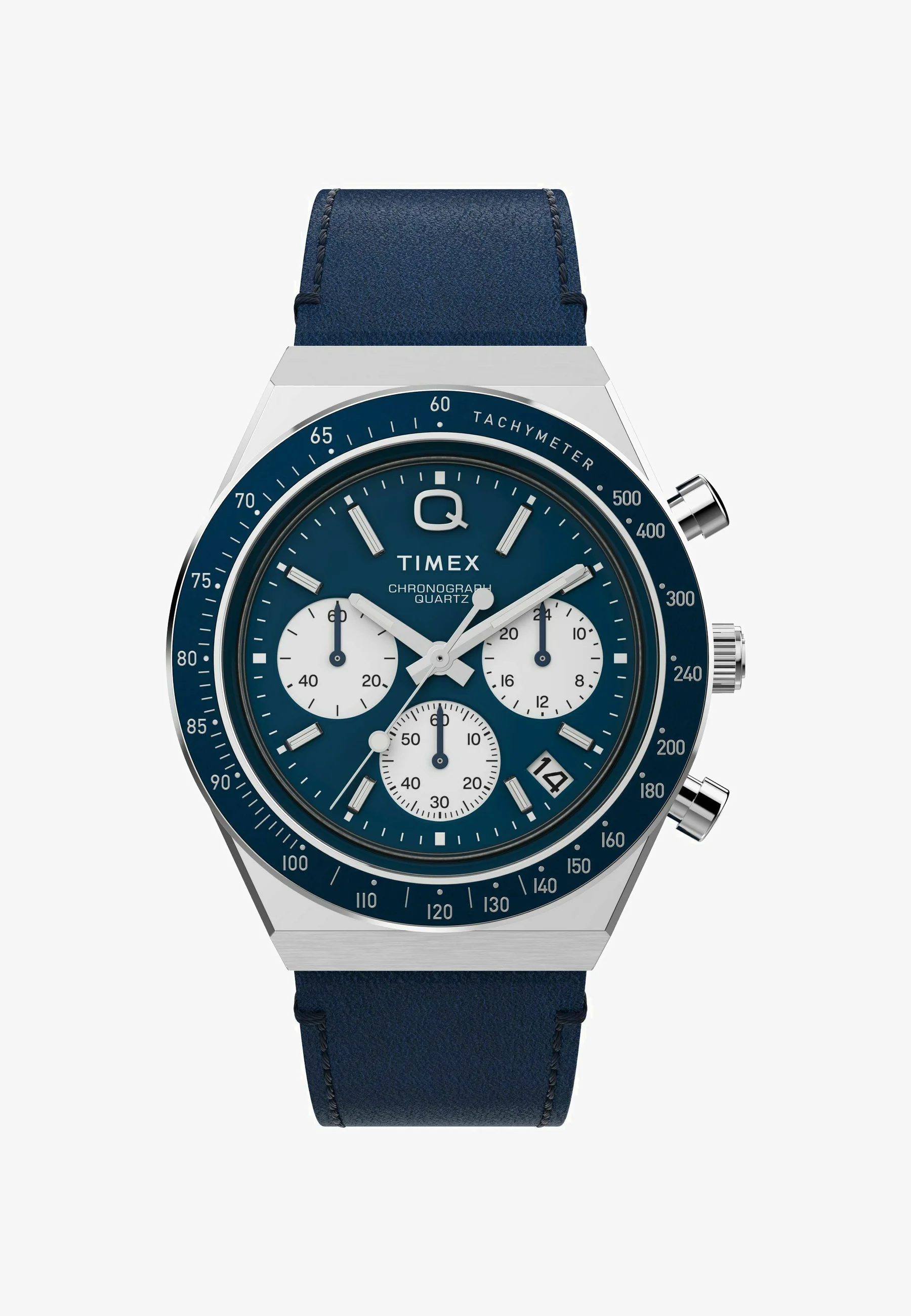
The most recognizable features are the pushers, typically located at 2 o’clock and 4 o’clock on the side of the watch case, flanking the winding crown. The top pusher usually starts and stops the chronograph function, while the bottom pusher resets it back to zero. When activated, a central sweep seconds hand begins to move, tracking elapsed seconds, and smaller auxiliary dials, known as sub-dials or registers, record elapsed minutes and, on some models, hours.
One of the defining characteristics of a racing chronograph watch is the tachymeter scale, prominently displayed on the bezel or sometimes on the outer edge of the dial. This scale allows you to calculate speed over a known distance. To use it, you simply start the chronograph when you begin a measured mile (or kilometer) and stop it when you complete that distance. The number the central seconds hand points to on the tachymeter scale then indicates your average speed in units per hour.
Beyond the standard chronograph, some racing chronographs feature specialized complications:
- Flyback Chronographs: Originally developed for military aviators, a flyback allows you to reset and restart the chronograph with a single press of a pusher while it’s still running, saving precious seconds when timing consecutive events.
- Split-Seconds Chronographs (Rattrapante): These advanced chronographs feature two central seconds hands. One can be stopped to record an intermediate time (like a lap split), while the other continues to run, eventually catching up. This allows for timing multiple events that start simultaneously but end at different times.
Many racing chronographs also feature high-contrast dials, often with bold numerals or “panda” (white dial, black sub-dials) or “reverse panda” (black dial, white sub-dials) layouts, ensuring maximum legibility even at a quick glance in fast-paced environments.
Champions of Time: Popular Racing Chronograph Brands and Their Characteristics
The world of racing chronographs is dominated by brands that have not only embraced the spirit of motorsport but have also forged lasting partnerships with racing teams and events.
Iconic Brands and Models
- Rolex Daytona: Arguably the most famous racing chronograph globally, the Rolex Cosmograph Daytona, named after the iconic Daytona International Speedway, has been a benchmark since its introduction in 1963. Its evolution from manual-winding to in-house automatic movements and its undeniable connection to figures like Paul Newman make it a perennial favorite for collectors and enthusiasts alike.
- TAG Heuer: With a motorsport heritage arguably deeper than any other brand, TAG Heuer (formerly Heuer) is synonymous with racing.
- Monaco: Famous for its square case and association with Steve McQueen, it was also one of the world’s first water-resistant automatic chronographs.
- Carrera: Designed by Jack Heuer with racing drivers in mind for legibility and clean lines, its name honors the perilous Carrera Panamericana road race.
- Autavia: Initially a dashboard timer, it evolved into an iconic wristwatch chronograph in the 1960s, known for its durability and clarity, particularly worn by Jo Siffert.
- Formula 1: A more accessible line that maintains a strong connection to the pinnacle of motorsport, often released in collaboration with F1 teams like Red Bull Racing.
- Omega Speedmaster Racing: While globally known as the “Moonwatch,” the Speedmaster’s original design in 1957 was for drivers, distinguishing itself by placing the tachymeter scale on the bezel for better legibility. Omega’s “Racing” sub-collections continue this competitive motorsport spirit.
- Breitling Top Time: This collection blends vintage aesthetics with modern engineering, featuring cushion-shaped cases and “dashboard dial” motifs, reminiscent of 1960s racing. Models like the “Martini Racing” edition capture the thrill of rally driving with iconic color schemes.
Other Notable Contenders
Many other prestigious brands have contributed significantly to the racing chronograph landscape, including:
- IWC: Known for its “Pilot’s Watch Chronograph Edition AMG,” reflecting its long-standing partnership with Mercedes-AMG and their Formula 1 team.
- Tudor Black Bay Chrono: Offering high-contrast “panda” dials and robust construction, it leverages Tudor’s half-century of chronograph expertise.
- Chopard Mille Miglia: Directly inspired by the classic Italian endurance race of the same name, Chopard releases new editions annually, often featuring vintage-inspired dials and tire-tread rubber straps.
- Girard-Perregaux Laureato Chronograph Aston Martin Edition: A luxurious collaboration highlighting the renewed presence of Aston Martin in Formula 1.
- Seiko Prospex Speedtimer: Seiko’s contribution, including one of the world’s first automatic chronographs in 1969, offers excellent value and heritage.
- Zenith Chronomaster Sport: Housing the legendary El Primero movement, it’s a blend of heritage and cutting-edge sporting technology.
The market also sees a distinct “generational divide,” as watch collector Mark Hammerschmidt notes, with vintage pieces appealing to fans who grew up watching legends like Hunt, Lauda, and Senna, while newer models resonate more with fans of modern F1 drivers like Charles Leclerc and Lando Norris. This dynamic keeps the racing chronograph market vibrant, with brands consistently releasing limited editions and embracing automotive partnerships that, when genuine, add significant allure to these mechanical marvels.
The Driver’s Manual: Choosing and Maintaining Your Racing Chronograph Watch
Bringing a racing chronograph watch into your collection is an exciting journey, whether you’re a seasoned horologist or a newcomer. Choosing the right one and keeping it in prime condition involves understanding a few key factors.
How to Choose Your Perfect Racing Chronograph
When you’re in the market for a racing chronograph, consider these practical aspects to ensure it fits your lifestyle and expectations:
- Water Resistance: While not a dive watch, a racing chronograph should ideally have at least 50 meters of water resistance to handle splashes, rain, or accidental submersion without worry. This ensures durability for everyday active moments.
- Durable Case Materials: Stainless steel is a popular choice, offering robust protection against bumps and scratches. Some high-end options might feature carbon fiber or titanium for lightweight strength.
- Legibility: Look for a clear, readable dial with functional sub-dials. High-contrast layouts (like “panda” dials) are excellent for quick glances. Less cluttered designs are often more versatile.
- Comfortable Strap Options: The strap greatly influences daily wearability. Leather straps offer a classic, refined look, while rubber or nylon straps are perfect for sportier activities and warmer climates. Metal bracelets provide a more robust and elegant feel. Many watches offer interchangeable strap options, allowing you to adapt your watch to different outfits and activities.
- Price Point: Racing chronographs span a vast price range, from accessible mecha-quartz models to ultra-luxury mechanical masterpieces. Define your budget, but remember that quality and craftsmanship can be found at various price levels. As Iván Zomborácz, a senior editor at Forbes Hungary and competitive motorcycle racer, points out, “People don’t buy racing chronographs to time laps anymore. They buy them to feel connected to the sport and its history”. This means balancing function with the emotional connection the watch provides.
Keeping Your Chronograph in Top Shape: Maintenance and Care
A little Tender Loving Care (TLC) goes a long way in preserving the beauty and functionality of your racing chronograph:
- Regular Cleaning: Wipe your watch regularly with a soft, dry cloth to remove dirt, sweat, and oils, especially around the pushers and bezel.
- Water Exposure Awareness: Even with water resistance, avoid exposing your watch to hot showers, saunas, or extreme temperature changes, as this can compromise the seals over time. If it’s only 50M water-resistant, it’s fine for swimming but not suitable for deep diving.
- Strap Rotation: If you have multiple straps, rotating them allows materials to breathe and prevents premature wear, extending their lifespan.
- Professional Servicing: Mechanical chronographs are complex machines and benefit from professional servicing every 3 to 5 years. This ensures the movement remains accurate and all components function smoothly, protecting your investment.
Beyond the Finish Line: Collector’s Value and Trends
The racing chronograph watch has a unique position in the collector’s market, blending historical significance with mechanical artistry and a powerful emotional resonance. The enduring appeal isn’t just about the timekeeping functionality; it’s about owning a piece of history, a symbol of human endeavor, and a connection to a thrilling sport.
Vintage racing chronographs hold a particularly strong allure. The most expensive wristwatch ever sold, Paul Newman’s Rolex Daytona, fetched a staggering $17.8 million, underscoring the immense value collectors place on these iconic pieces. Vintage models from brands like Heuer, Omega, and Rolex, especially those with unique dial configurations or significant provenance, continue to be highly sought after. They offer a tangible link to a bygone era of motorsport where watches were indispensable tools rather than just accessories.
Current trends in the market see a continuous stream of limited editions and brand collaborations. TAG Heuer’s partnerships with Porsche and Red Bull Racing, Chopard’s annual Mille Miglia editions, and Richard Mille’s cutting-edge designs, often linked to F1 teams, highlight how luxury watch brands continue to leverage automotive partnerships for marketing and exclusivity. These collaborations often produce timepieces that are not only aesthetically striking but also push the boundaries of materials and engineering.
However, as discussed by experts like Mark Hammerschmidt and Iván Zomborácz, the primary motivation for buying a racing chronograph today isn’t always motorsport heritage alone. While some collectors are drawn to the historical ties, many are captivated by the “swagger” of owning such a piece or simply enjoy the aesthetic and the connection it provides to the sport’s fast-paced history. This shift means that while heritage is valued, innovation and contemporary design also drive demand, appealing to a newer generation of fans who connect with modern drivers and the evolving digital landscape of Formula 1.
Ultimately, a racing chronograph watch today is as much a lifestyle statement as it is a mechanical marvel, embodying passion, precision, and a timeless link to the world of speed.
Dressed for Success: Styling Your Racing Chronograph with Panache
One of the most appealing aspects of a racing chronograph watch is its surprising versatility. While it might scream “track-ready,” with the right pairing, it can effortlessly transition from casual outings to formal events, injecting a dose of confident style into any ensemble. The key is understanding how to match its inherent sporty sophistication with the tone of your outfit.
Casual Settings
For everyday wear, a racing chronograph can elevate simple attire like T-shirts, jeans, or even smart joggers. This is where you can truly let its sporty character shine. Consider swapping out a metal bracelet for a supple leather strap or a durable nylon or rubber band. These materials soften the watch’s rugged edge and reinforce a relaxed, active vibe.
Expert Tip: “Think about complementary colors,” suggests fashion stylist Julian Thorne. “If your chronograph has a touch of blue, a navy nylon strap can tie the whole look together beautifully, adding depth without being over the top.”
Business Attire
Wearing a racing chronograph with a suit might seem counterintuitive, but it’s absolutely doable with a mindful approach. Opt for chronographs with cleaner dials and more subdued color palettes—think classic black, silver, or navy watch faces. A sleek steel bracelet or a dark, high-quality leather strap will maintain professionalism while allowing the watch’s robust character to subtly peek through. This balance adds a modern, dynamic edge to fitted shirts and slim-cut suits, refreshing your business look.
Formal Events
Formal occasions demand a touch more subtlety. You want your chronograph to whisper confident style, not shout “race ready”. Choose models with minimalist sub-dials and slender profiles. A polished metal bracelet, rather than a matte one, can elevate the entire ensemble, pairing perfectly with a classic tuxedo or a sharp blazer. Avoid bulky, oversized racing chronographs for these settings, as they can clash with the refined elegance required.
Common Styling Mistakes to Avoid
- Mismatch in Formality: A chunky, brightly colored racing chronograph with a formal dinner suit can look jarring. Always consider the occasion’s tone.
- Ignoring Strap Changes: Not switching a rubber band for leather or metal when changing attire limits your watch’s versatility significantly.
- Over-accessorizing: Chronographs already draw attention. Piling on too many bracelets or flashy rings can overcrowd your wrist and detract from the watch itself.
- Forgetting Size Balance: If your watch face is disproportionately large for your wrist, it can disrupt your overall look. Aim for a medium-sized dial for better balance.
Frequently Asked Questions About Racing Chronograph Watches
Understanding the intricacies of your racing chronograph can enhance your appreciation and ensure you get the most out of it. Here are some common questions answered:
Q: Can you wear a sport chronograph with a formal suit?
A: Absolutely! The trick is to choose a chronograph with a slimmer profile, cleaner dial, and a polished metal bracelet or a high-quality dark leather strap. This combination adds a touch of sophistication that complements formal wear beautifully without looking out of place.
Q: What strap material works best for daily wear with a racing chronograph?
A: For versatile daily wear, both leather and stainless steel are excellent, durable choices. However, if your daily activities involve a lot of sweat or water, a rubber or nylon strap will be more comfortable and resilient. Many racing chronographs now offer interchangeable strap systems for ultimate flexibility.
Q: How often should I get my mechanical racing chronograph serviced?
A: For mechanical models, a good rule of thumb is to have your chronograph professionally serviced every 3 to 5 years. This routine maintenance ensures the complex movement remains accurate, lubricated, and functioning optimally, preventing costly issues down the line.
Q: Is a racing chronograph suitable for water sports?
A: It depends on the water resistance rating. A 50-meter (5 ATM) rating is generally sufficient for splashes and light swimming, but it’s not recommended for deep diving, hot showers, or extended periods in the water due to potential damage to seals. For serious water sports, look for watches with higher ratings (e.g., 100M+ or specific dive chronographs).
Q: Can I customize my racing chronograph?
A: Yes, many brands offer options for customization, most commonly through interchangeable straps or bracelets. Some higher-end or boutique brands might even allow for bezel or dial swaps, offering a fun way to personalize your watch and match it to your evolving style without purchasing an entirely new timepiece.
The Enduring Allure
The racing chronograph watch is more than a simple instrument for telling time; it is a profound blend of history, sophisticated engineering, and personal expression. From its humble beginnings in timing horse races to becoming an indispensable tool on the most famous circuits, it has evolved into a coveted symbol of passion, precision, and the relentless pursuit of excellence. Whether you’re drawn to the iconic legacy of a vintage Daytona, the bold innovation of a modern TAG Heuer, or simply appreciate the masterful craftsmanship, owning a racing chronograph connects you to a thrilling narrative that transcends the ticking of seconds. Explore the world of racing chronographs, find the piece that speaks to your inner speed demon, and wear a statement that embodies both timeless style and exhilarating performance.