Stepping into the world of horology, few complications captivate the imagination quite like the Classic Chronograph Watch. More than just a time-teller, it’s a miniature engineering marvel that brings a stopwatch function right to your wrist. For enthusiasts and newcomers alike, the allure of these precision instruments lies in their blend of historical significance, intricate mechanics, and undeniable style. A classic chronograph watch isn’t merely an accessory; it’s a conversation starter, a nod to human ingenuity, and a reliable partner for measuring life’s fleeting moments. Whether you’re timing a lap, boiling an egg, or simply appreciating the dance of its many hands, a classic chronograph watch offers a tangible connection to the art of timekeeping.
A Journey Through Time: The Rich History and Enduring Significance of the Chronograph Watch
The story of the chronograph is a fascinating saga of innovation, driven by the need for ever-greater precision in a world eager to measure fleeting events. Its evolution from a bulky instrument to a sophisticated wristwatch complication reflects centuries of watchmaking brilliance.
From Ink Marks to Wristwear: Early Innovations
The very term “chronograph” stems from the Greek words “chronos” (time) and “graph” (writing), a direct nod to its earliest form. While the concept of stopping time existed before, the true genesis of the chronograph as we know it began in the early 19th century. Louis Moinet is often credited with creating the first “compteur de tierces” in 1816, a highly precise instrument primarily used for astronomical observations, capable of measuring time to 1/60th of a second. However, it was Nicolas Mathieu Rieussec who, in 1821, patented and commercialized a device explicitly named “chronograph.” Commissioned by King Louis XVIII to time horse races, Rieussec’s invention famously used ink-tipped hands to mark elapsed time on a rotating dial, literally “writing time.”
Further innovations refined the mechanism. Joseph Thaddäus Winnerl, working with Breguet, conceptualized the split-seconds or “rattrapante” chronograph in 1831, allowing two separate events to be timed simultaneously. Later, in 1844, Adolphe Nicole revolutionized the chronograph by inventing the “zero-setting heart,” a precursor to the modern flyback function, which allowed the stopwatch hands to instantly reset to zero without needing to be stopped first. These early advancements laid the groundwork for the complex, yet elegant, chronographs we cherish today.
The Leap to the Wrist: Chronographs in the 20th Century
The early 20th century marked a pivotal shift: the transition of the chronograph from pocket to wrist. Driven by the demands of military and aviation, where precise, hands-free timing was critical, watchmakers began miniaturizing these complex movements. Longines is notably recognized for introducing one of the first wrist chronographs in 1913, featuring its legendary 13.33Z caliber. Breitling followed closely in 1915, ushering in an era where the wristwatch chronograph became an indispensable tool for pilots, drivers, and explorers.
A significant leap in user-friendliness came in the 1930s when Breitling introduced the first chronograph with two independent pushers – one for start/stop and another for reset – a configuration that became the industry standard. This greatly improved the practicality of the watch, making it more intuitive to operate. The 1960s witnessed an intense “race to the moon” not just in space, but also in horology: the competition to produce the first automatic chronograph movement. In 1969, three major contenders emerged almost simultaneously: Zenith with its high-frequency El Primero, Seiko with its Caliber 6139, and a consortium comprising Heuer, Breitling, Hamilton-Buren, and Dubois Dépraz, who developed the Chronomatic movement. This era cemented the chronograph’s place in popular culture and solidified its status as a cornerstone of watchmaking.
The Heartbeat of Precision: Understanding the Chronograph’s Mechanism and Key Components
At its core, a classic chronograph watch is a mechanical marvel, combining the standard time-telling function with an independent stopwatch. Understanding its inner workings only deepens one’s appreciation for these intricate timepieces.
What Makes a Chronograph Tick?
A typical chronograph features several key components that facilitate its dual functionality. You’ll usually spot two or three “pushers” on the side of the watch case. One pusher (often at 2 o’clock) starts and stops the chronograph, while another (typically at 4 o’clock) resets it to zero. The central chronograph hand, distinct from the regular seconds hand, sweeps around the main dial to measure elapsed seconds. Smaller “sub-dials” (or registers) are strategically placed on the watch face, usually at 3, 6, and 9 o’clock, to track elapsed minutes and hours.
The internal mechanism that orchestrates this precision timing is a delicate ballet of gears, levers, and springs. A crucial element is the “clutch system,” which engages and disengages the chronograph mechanism from the main timekeeping train. The two primary types are the lateral clutch, which is visible and often admired through an exhibition caseback, and the vertical clutch, which offers smoother operation and reduces “jump” when the chronograph starts. Both systems demonstrate the intricate engineering required to integrate a stopwatch into a timepiece without interfering with its primary function.
Beyond Simple Timing: Common Scales and Complications
While basic chronographs simply time events, many classic models integrate additional scales and complications that enhance their utility.
- Tachymeter Scale: This is perhaps the most iconic chronograph scale, usually found on the bezel or outer edge of the dial. It allows you to calculate speed over a known distance (e.g., one kilometer or mile). [cite: 2, 1_3]
- Pulsometer Scale: Less common but historically significant, a pulsometer is used to measure a patient’s heart rate. The scale is calibrated to count a certain number of heartbeats (e.g., 15 or 30), allowing the user to read the beats per minute directly from the chronograph hand.
- Telemeter Scale: Used to measure the distance to an event that can be both seen and heard, such as a thunderstorm. You start the chronograph when you see the lightning and stop it when you hear the thunder, then read the distance on the telemeter scale.
Beyond scales, some chronographs boast advanced complications like the “rattrapante” (split-seconds) and “flyback” functions. A rattrapante chronograph features two central chronograph seconds hands, allowing the user to time two events that start at the same time but have different durations. The flyback function, highly valued by pilots, enables the chronograph to be reset and restarted instantly with a single push of a button, without needing to stop it first. These complications underscore the ingenuity and practical applications of the classic chronograph watch.
Icons of Horology: Popular Classic Chronograph Types and Their Hallmarks
The landscape of classic chronograph watches is rich with legendary models, each carrying a unique story and design DNA. These aren’t just watches; they’re pieces of history, engineering triumphs, and design icons.
Racing Legends and Aviation Pioneers
The classic chronograph found its true calling in the worlds of motorsports and aviation, leading to the creation of some of the most recognizable timepieces ever made.
- Omega Speedmaster: Universally known as the “Moonwatch,” the Omega Speedmaster Professional earned its legendary status by being the first watch worn on the Moon in 1969. [cite: 1_1, 2_1, 3_1, 4_1, 5_1] Its robust design, reliable manual-wound movement, and clear legibility made it indispensable for NASA astronauts. Beyond space, its association with racing has also cemented its iconic status.
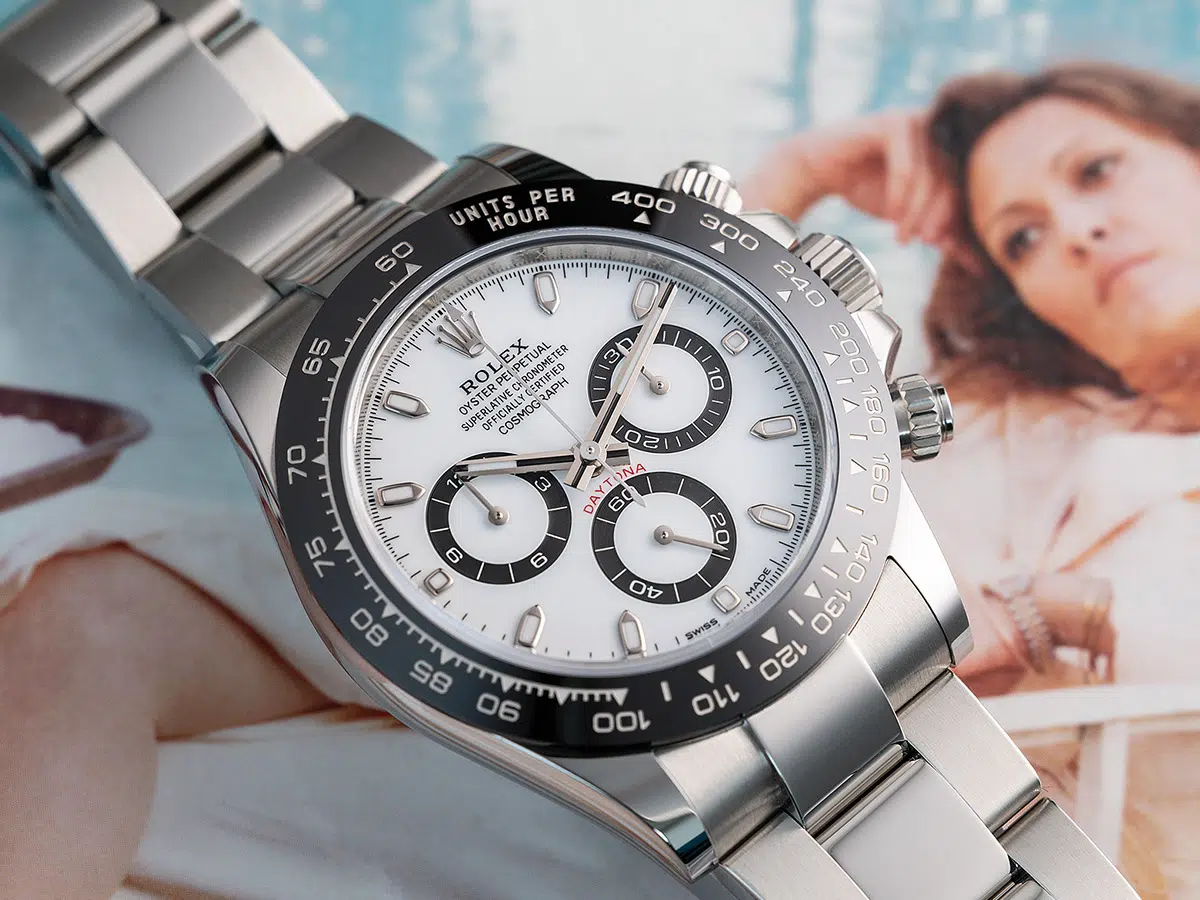
- Rolex Daytona: Synonymous with racing and ultimate luxury, the Rolex Cosmograph Daytona is one of the most coveted chronographs in the world. [cite: 1_1, 3_1, 4_1, 5_1] Named after the famous racetrack, its distinctive tachymeter bezel and contrasting sub-dials have made it a timeless classic, continually evolving while retaining its core aesthetic.
- TAG Heuer Carrera & Monaco: TAG Heuer (originally Heuer) is deeply intertwined with motorsports. The Carrera, introduced by Jack Heuer in 1963, was designed for optimal legibility for racing drivers. [cite: 1_1, 2_1, 3_1, 4_1, 5_1] The avant-garde, square-cased Heuer Monaco, famously worn by Steve McQueen in the film Le Mans, was one of the first automatic chronographs and remains a bold design statement. [cite: 1_1, 2_1]
- Breitling Navitimer: An icon for aviators, the Breitling Navitimer, introduced in 1952, features a distinctive slide rule bezel that allows pilots to perform complex calculations directly on their wrist, from fuel consumption to airspeed conversions. [cite: 1_1, 2_1, 4_1] Its complex yet functional design makes it instantly recognizable.
High-Frequency Marvels and Masterful Craftsmanship
Beyond their utilitarian roots, classic chronographs are celebrated for their sophisticated movements and exceptional craftsmanship.
- Zenith El Primero: A true horological marvel, the Zenith El Primero, launched in 1969, was a groundbreaking achievement as one of the very first integrated automatic chronograph movements. [cite: 1_1, 2_1, 3_1, 4_1, 5_1] Its high-frequency balance wheel, beating at 36,000 vibrations per hour (vph), allows for precise measurement of time to 1/10th of a second, setting a new standard for accuracy.
- A. Lange & Söhne Datograph: For those who appreciate haute horlogerie, the Datograph from German manufacturer A. Lange & Söhne represents the pinnacle of chronograph craftsmanship. [cite: 2_1] Introduced in 1999, it features an exquisitely finished, in-house manual-wound movement with a “flyback” function and a distinctive “outsize date,” showcasing unparalleled attention to detail and mechanical artistry.
Other notable brands such as Longines, IWC with its Pilot’s Watch Doppelchronograph, and Seiko with its historically significant 6139 “Pogue” chronograph, have also made indelible marks on the classic chronograph landscape, each offering a unique blend of heritage, design, and technical prowess. [cite: 3_1]
Your Guide to Ownership: Choosing and Caring for a Classic Chronograph Watch
Acquiring a classic chronograph watch is an investment in both style and horological heritage. To ensure your timepiece brings lasting joy, careful consideration during purchase and diligent care are essential.
Finding Your Perfect Timeless Companion
Choosing the right classic chronograph watch is a deeply personal journey, influenced by your lifestyle, aesthetic preferences, and practical needs.
- Consider Your Lifestyle and Needs: Are you an avid sports enthusiast needing rugged durability and water resistance? A business professional seeking an elegant, uncluttered dial? Or perhaps a collector valuing brand heritage and unique complications? Your intended use should guide your choice. [cite: 1_3, 2_3, 3_3, 4_3]
- Movement Type: Mechanical vs. Quartz: Mechanical chronographs, powered by intricate springs and gears, offer a traditional feel and are prized for their craftsmanship. They often require more careful handling and regular servicing. Quartz chronographs, battery-powered, are known for their exceptional accuracy and generally more accessible price point. [cite: 1_3, 3_3] For a “classic” experience, mechanical is often preferred.
- Materials, Size, and Fit: Stainless steel is a durable and classic choice, while precious metals offer a touch of luxury. Consider the case diameter and thickness relative to your wrist size for optimal comfort and aesthetic balance. The strap material – leather for elegance, metal for robustness, or even NATO for a casual look – also plays a significant role in both feel and style. [cite: 1_3, 3_3]
- Brand Heritage and Authenticity: Researching reputable brands with a strong history in chronographs, such as those mentioned above, is crucial. For vintage pieces, purchasing from authorized dealers or trusted online marketplaces with strong authenticity guarantees is highly recommended. [cite: 1_3, 4_3]
- Functionality: While the stopwatch is standard, consider if additional features like a tachymeter, date display, or more advanced complications like flyback are genuinely useful for you. [cite: 3_3]
Nurturing Your Investment: Essential Care and Maintenance Tips
A classic chronograph watch, with its complex movement, requires thoughtful care to maintain its precision and longevity.
- Regular Servicing and Cleaning: Mechanical watches should undergo professional servicing every 3 to 5 years. This includes cleaning, lubrication, and checking seals. [cite: 1_3, 2_3, 3_3] Between services, a gentle wipe with a soft, clean cloth keeps dust and fingerprints at bay. [cite: 3_3]
- Avoiding Magnetic Fields: Strong magnetic fields from electronic devices (smartphones, speakers) can disrupt the delicate balance wheel and impair your watch’s accuracy. Store your chronograph away from such sources. [cite: 2_3, 3_3]
- Proper Handling of Crown and Pushers, Especially Date Adjustment: Always be gentle when operating the crown and pushers. For mechanical chronographs with a date function, it’s critical to avoid adjusting the date when the time is between approximately 9 PM and 3 AM. During this period, the date change mechanism is engaged, and manual adjustment can strip the delicate gears. “Always adjust the date when the hour and minute hands are positioned in the lower half of the dial, ideally around 6:30,” advises horology expert Dr. Elara Vance. [cite: 5_3]
- Storage and Winding for Automatic Models: When not worn, store your watch in a watch box or soft pouch to protect it from knocks, dust, and humidity. [cite: 2_3] For automatic chronographs that aren’t worn daily, a watch winder can keep the mainspring wound, ensuring the lubricants remain evenly distributed and the watch keeps accurate time. [cite: 3_3, 5_3]
Beyond Functionality: Collecting Value, Modern Trends, and Personal Style
The classic chronograph watch transcends its role as a mere time-telling device; it’s a statement of personal style, a tangible link to history, and for many, a passion for collecting.
The Allure of Collecting and Market Trends
The classic chronograph market is vibrant, with strong demand for both vintage and modern pieces. Iconic vintage models, particularly those from the “golden era” of the 1960s and 70s, often command significant prices and are considered sound investments. [cite: 2_1, 3_1] Many brands recognize this enduring appeal and regularly release heritage-inspired re-issues, blending vintage aesthetics with modern reliability. [cite: 2_1, 5_1] The tactile experience of operating a mechanical chronograph, the story behind each dial, and the connection to historical events or figures make these watches profoundly collectible.
Making a Statement: Styling Your Classic Chronograph
One of the great strengths of a classic chronograph watch is its versatility. It can effortlessly transition from casual to formal settings, adapting to your personal style with ease. A racing chronograph on a robust steel bracelet or a leather rally strap perfectly complements weekend attire or smart-casual looks. A more refined classic, perhaps on a luxurious alligator strap, can elevate a business suit or evening wear. The key is to choose a chronograph that resonates with your personal aesthetic and to experiment with different strap options to match various outfits and occasions. Ultimately, a classic chronograph watch is an extension of your personality, a piece that speaks volumes about your appreciation for history, precision, and timeless design.
Frequently Asked Questions (FAQ)
What is the difference between a chronograph and a regular watch?
A chronograph watch combines the standard time-telling function of a regular watch with an independent stopwatch mechanism, allowing you to measure elapsed time. Regular watches simply display the current time.
Why are classic chronographs so expensive?
Their cost is often due to the complexity of their mechanical movements, which require intricate craftsmanship and many components. Brand heritage, historical significance, limited production, and the use of high-quality materials also contribute to their value.
How often should I service my mechanical chronograph?
Most experts recommend that mechanical chronographs be serviced every 3 to 5 years to ensure optimal performance, lubrication, and to check the integrity of seals. [cite: 1_3, 2_3, 3_3]
Can I wear my classic chronograph everyday?
Absolutely! Many classic chronographs are built for durability and everyday wear. However, consider its water resistance and robustness if your daily activities involve significant exposure to water or rough conditions. For delicate or highly valuable vintage pieces, you might choose to reserve them for special occasions.
What are the most collectible classic chronographs?
Some of the most highly sought-after classic chronographs include the Omega Speedmaster Professional, Rolex Daytona, Breitling Navitimer, Zenith El Primero, and TAG Heuer Carrera and Monaco models. Their iconic status, historical significance, and design appeal make them perennial favorites among collectors. [cite: 1_1, 2_1, 3_1, 4_1, 5_1]
Conclusion
The classic chronograph watch stands as a monument to human ingenuity and a testament to the enduring appeal of mechanical artistry. From its pioneering ink-marking days to its modern-day iconic status, it has consistently offered more than just time – it has offered the power to capture and reflect on moments, big and small. For anyone looking to deepen their appreciation for horology or simply seeking a sophisticated, functional, and deeply satisfying timepiece, exploring the world of the classic chronograph watch is an adventure well worth undertaking. Its rich history, intricate mechanics, and timeless style continue to captivate, ensuring its place as a cherished companion on the wrist for generations to come.