Imagine a timepiece robust enough to conquer the ocean’s depths yet intricate enough to time events with split-second accuracy. That’s the Chronograph Dive Watch for you – a fascinating blend of two highly specialized horological marvels. While some might jokingly call it an “oxymoron” due to the traditional limitations of using a chronograph underwater, this unique category has carved out a loyal following among enthusiasts who appreciate its undeniable versatility and complex engineering. It’s a watch that promises both adventure and precision, a true companion for those who demand the most from their wristwear.
A Deep Dive into History: The Evolution of Chronographs and Dive Watches
The journey of the chronograph dive watch is a tale of innovation born from necessity, merging two distinct paths in watchmaking.
The Birth of the Stopwatch: Tracing the Chronograph’s Origins
The concept of measuring elapsed time independently of the main clock goes back centuries. The word “chronograph” itself comes from the Greek words “chronos” (time) and “grapho” (to write), initially referring to devices that literally marked time on a dial. While earlier efforts existed, Louis Moinet is often credited with creating the first true chronograph in 1816, designed for astronomical observations, capable of measuring time to 1/60th of a second. Later, Nicolas Mathieu Rieussec popularized the “ink-writing” chronograph for horse racing in 1821. As the 20th century dawned, especially around World War I, the chronograph shrunk from pocket-sized instruments to practical wristwatches, with pioneers like Breitling, Omega, and Longines leading the charge in developing sophisticated mechanical movements.
Conquering the Depths: The Rise of the Dive Watch
The need for reliable underwater timekeeping became paramount with the advent of scuba diving. Early attempts at water resistance paved the way, but the real revolution began in the mid-20th century. Rolex’s patented Oyster case in the 1920s offered a crucial step towards sealing a watch against water. However, it was in 1953 that the modern dive watch as we know it truly emerged, with Blancpain introducing the Fifty Fathoms, closely followed by Rolex’s iconic Submariner. These watches set the standards: exceptional water resistance, a robust case, luminous hands and markers for legibility in low light, and critically, a unidirectional rotating bezel for timing dive duration to prevent accidental overestimation of remaining air. Seiko also made significant contributions, especially in the 1960s, pushing boundaries with increased depth ratings and innovative case designs.
When Two Worlds Collide: The Advent of the Chronograph Dive Watch
It wasn’t long before watchmakers began to explore the possibility of combining these two highly functional tools. By the mid-1960s, the first chronograph dive watches started to appear, offering divers the added utility of a precise stopwatch function alongside their depth-ready timekeepers. This fusion created a new category of “tool watches” that were not just water-resistant, but also capable of complex timing operations, appealing to professionals and enthusiasts alike who sought maximum functionality on their wrist.
The Heartbeat of the Ocean: How Chronograph Dive Watches Work
At its core, a chronograph dive watch is a mechanical marvel that seamlessly integrates two distinct functionalities. Understanding how each component contributes is key to appreciating this intricate timepiece.
Understanding the Chronograph Mechanism
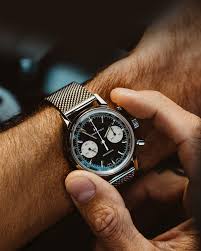
A chronograph is essentially a stopwatch built into a traditional watch movement. It operates independently, allowing you to start, stop, and reset a separate timing function using dedicated pushers, typically located on the side of the watch case alongside the crown. The central seconds hand usually serves as the chronograph’s sweep second hand, while smaller sub-dials track elapsed minutes (often up to 30 or 60) and sometimes hours. This intricate dance of gears and springs allows for precise measurement of specific intervals, from tracking a lap time to timing a recipe.
The Unyielding Power of a Dive Watch
A true dive watch adheres to stringent ISO 6425 standards, ensuring its reliability in challenging underwater environments. Key features include:
- High Water Resistance: A minimum of 100 meters (330 feet), though many models boast 200m, 300m, or even greater depths.
- Unidirectional Rotating Bezel: This crucial safety feature allows a diver to mark the start of their dive or track decompression stops. It only rotates counter-clockwise, meaning if accidentally knocked, it will only indicate a longer elapsed time, thus enhancing safety.
- Superior Legibility: Large, luminous hands and hour markers ensure time can be read clearly in murky water or low-light conditions.
- Robust Construction: A strong case, screw-down crown, and often a sapphire crystal protect the delicate movement from pressure and impact.
The Synergy and the Challenges: Operating Underwater
The marriage of a chronograph and a dive watch presents unique engineering challenges, particularly concerning the operation of the chronograph function underwater.
Can you use chronograph pushers underwater?
Traditionally, most chronograph pushers, even on water-resistant watches, were not designed to be operated underwater. The act of pushing them could compromise the water seal, leading to water ingress. Many chronograph dive watches feature screw-down pushers, which must be secured before a dive to maintain water resistance, rendering the chronograph function unusable while submerged.
However, advancements in watchmaking have led to select models with specially engineered, sealed pushers that can be safely activated underwater. Omega’s Seamaster Chronograph series, for instance, is renowned for its pushers that are functional at depth, making it a true underwater timing instrument. Other brands like Blancpain, with some of its Fifty Fathoms Bathyscaphe chronographs, also offer this capability. For most chronograph dive watches, however, the chronograph function is best reserved for surface use, complementing the dive bezel for underwater timing. This allows for diverse timing needs, from tracking a surface interval between dives to timing a cooking session after a day in the ocean.
Beyond the Surface: Key Features of a Chronograph Dive Watch
A chronograph dive watch is more than just the sum of its parts; it’s a carefully engineered instrument where every feature serves a purpose, whether above or below the waves.
Uncompromising Water Resistance and Durability
The bedrock of any dive watch is its ability to withstand intense water pressure. Chronograph dive watches typically boast water resistance ratings of 200m (660ft) or 300m (1000ft), making them suitable for recreational and professional diving. This is achieved through robust case construction, often employing stainless steel, lightweight titanium, or even scratch-resistant ceramic. Screw-down crowns and case backs are standard, creating a hermetic seal. The pushers, as discussed, are either screw-down for surface-only chronograph use or specially sealed for underwater operation.
The Crucial Rotating Bezel
Even with a chronograph, the unidirectional rotating bezel remains an indispensable tool for divers. It’s used to track elapsed time, set decompression stops, or monitor oxygen supply. The bezel’s counter-clockwise rotation ensures that any accidental bump will only indicate a longer, and therefore safer, elapsed time. On chronograph dive watches, this bezel often features a full 60-minute scale, sometimes with an additional inner scale or a distinct color coding for enhanced functionality and aesthetics.
Legibility in the Darkest Depths
Visibility is paramount underwater. Chronograph dive watches feature large, often oversized, hands and hour markers coated generously with luminescent material (Lume), ensuring optimal readability even in low-light conditions or murky waters. The dial layout, despite the added complexity of sub-dials, is designed to prioritize essential dive information. High-contrast colors, often dark dials with bright white or colored markers, further enhance legibility.
Dial Layouts and Aesthetics
The chronograph complication introduces sub-dials and pushers, giving these watches a characteristically busy yet purposeful aesthetic.
- Bi-Compax: Two sub-dials, typically for elapsed minutes and running seconds.
- Tri-Compax: Three sub-dials, often adding an elapsed hours counter.
The pushers on either side of the crown add to the “tool watch” appeal. Despite the additional elements, designers strive for harmony, ensuring the watch remains functional and visually appealing, striking a balance between the legibility of a dive watch and the technical intricacy of a chronograph.
Iconic Timekeepers: Renowned Chronograph Dive Watches
The world of chronograph dive watches is rich with storied brands and innovative models, ranging from high-horology masterpieces to rugged, accessible adventurers.
Luxury Legends
In the upper echelons, brands like Omega, Blancpain, and Glashütte Original have produced some truly iconic chronograph dive watches.
- Omega Seamaster Diver 300M Chronograph: A quintessential example, known for its distinctive wave dial, impressive water resistance, and the notable feature of pushers that can be operated underwater. It’s a favorite among serious divers and watch aficionados alike.
- Blancpain Fifty Fathoms Bathyscaphe Chronographe Flyback: Building on the legacy of the original dive watch, these models combine sophisticated flyback chronograph movements with exceptional dive capabilities, showcasing elegant design and robust performance.
- Glashütte Original SeaQ Chronograph: A more recent entrant, combining German precision engineering with a vintage-inspired dive watch aesthetic. These watches offer a luxurious take on the tool watch, often featuring the brand’s signature Panorama Date.
Accessible Adventures
For those seeking robust functionality without the haute horlogerie price tag, several brands offer excellent chronograph dive watches that deliver on performance and style.
- Seiko Prospex Chronograph Divers: Seiko is a powerhouse in dive watches, and their Prospex line includes several solar-powered quartz and mechanical chronograph divers that offer incredible value, robust build quality, and excellent water resistance.
- Oris Divers Sixty-Five Chronograph: These watches blend vintage charm with modern reliability. The Divers Sixty-Five collection, in particular, offers a retro aesthetic with modern chronograph complications, appealing to those who appreciate classic design.
- Certina DS Chronograph: Known for their “DS” (Double Security) concept, Certina offers chunky, retro-inspired chronograph dive watches that are built to withstand the elements, often featuring sturdy ETA movements.
- Doxa SUB 200 C-Graph: Doxa’s distinct cushion cases and vibrant dials are unmistakable. Their chronograph dive watches offer a unique aesthetic and serious dive capabilities, staying true to their heritage as professional diver’s instruments.
These examples represent just a fraction of the diverse and captivating world of chronograph dive watches, each offering its own blend of history, engineering, and style.
Navigating Your Purchase: A Buyer’s Guide to Chronograph Dive Watches
Choosing the perfect chronograph dive watch involves more than just admiring its aesthetics; it’s about aligning its capabilities with your lifestyle and needs.
Assessing Your Needs: Functionality vs. Style
Before anything else, consider your primary use. Are you a recreational diver who occasionally needs a stopwatch on land, or is the rugged, complex aesthetic simply appealing? If you plan on actually using the chronograph underwater, your options narrow significantly to models with truly sealed, operable pushers. For most, the “chronograph dive watch” is a versatile tool watch that excels in water resistance and offers a timing function for everyday tasks, making it a compelling choice for its robust nature and intricate design.
What to Look for in Water Resistance and Build Quality
Always check the water resistance rating. While 100m is the ISO minimum for a dive watch, 200m or 300m provides a greater margin of safety and versatility for various water activities. Look for solid case construction, usually in stainless steel or titanium, with a screw-down crown and case back. A sapphire crystal is highly recommended for its scratch resistance, protecting the dial from impact. The unidirectional bezel should have a firm, satisfying click and be easy to grip, even with wet hands.
Movement Types: Mechanical, Quartz, and Mecaquartz
- Mechanical (Automatic/Manual-wind): These are the purist’s choice, offering intricate craftsmanship and a “soul” to the watch. They require regular servicing but represent the pinnacle of traditional watchmaking. Many luxury chronograph dive watches feature automatic mechanical movements.
- Quartz: Powered by a battery, quartz movements are highly accurate, durable, and generally more affordable. They are low-maintenance and reliable, making them excellent “grab-and-go” options.
- Mecaquartz: A clever hybrid, combining the precision of a quartz movement for timekeeping with a mechanical module for the chronograph function. This offers the best of both worlds: quartz accuracy and the satisfying mechanical feel of a chronograph reset. Seiko’s VK64 movement is a popular mecaquartz caliber.
The Importance of Comfort and Strap Choice
Chronograph dive watches can often be thicker and larger than standard watches due to the added complications and robust cases. Try on different sizes to ensure it fits comfortably on your wrist. Strap material also plays a role in comfort and functionality. Rubber straps are ideal for diving due to their water resistance and flexibility. Stainless steel bracelets offer durability and a more formal look, often featuring diver’s extensions to fit over a wetsuit. NATO straps provide a secure fit and a sporty, casual aesthetic.
The Allure of the Deep: Collector Value and Future Trends
Chronograph dive watches hold a special place in the hearts of collectors and enthusiasts, blending historical significance with modern innovation.
Why Chronograph Dive Watches Fascinate Collectors
The appeal lies in their dual nature: the robust, purposeful design of a dive watch combined with the technical complexity and precision of a chronograph. This creates a compelling “tool watch” narrative that resonates deeply with those who appreciate functional engineering and adventurous spirit. Vintage models, particularly those from early manufacturers or with unique designs, are highly sought after, representing significant milestones in horological history. The sheer challenge of integrating two demanding complications into a single, water-resistant case is a testament to watchmaking prowess.
Emerging Trends and Innovations in Design
The market for chronograph dive watches continues to evolve, reflecting broader watch trends. We’re seeing a strong vintage revival, with brands reissuing or drawing inspiration from their historical models. There’s also an emphasis on advanced materials, such as titanium for lighter weight, ceramic for scratch resistance, and bronze for its unique patination. Sustainability is becoming increasingly important, with some brands incorporating recycled materials in their straps or packaging. Furthermore, Google search trends indicate a growing curiosity and awareness, particularly for “automatic diver chronograph watches,” suggesting a vibrant and expanding market. The blend of utility, intricate design, and adventurous aesthetic continues to entrance both passionate collectors and casual wearers alike.
FAQs about Chronograph Dive Watches
Q: What is the primary purpose of a chronograph dive watch?
A chronograph dive watch primarily serves to measure elapsed time, both above and below water, by combining the precision stopwatch function of a chronograph with the robust, water-resistant features and dive-timing bezel of a dive watch. It’s a versatile tool for timing events or monitoring dive duration.
Q: Can all chronograph dive watches be operated underwater?
No, not all chronograph dive watches can be operated underwater. Many feature screw-down pushers that must be sealed before diving to maintain water resistance, meaning the chronograph function cannot be used while submerged. Only select models from brands like Omega and Blancpain are designed with specially sealed pushers that allow for underwater activation.
Q: What water resistance rating is essential for a dive watch?
According to ISO 6425 standards, a true dive watch must have a minimum water resistance rating of 100 meters (330 feet). However, many models offer 200m (660ft) or 300m (1000ft), providing enhanced safety and suitability for various types of recreational and professional diving.
Q: How do you use the rotating bezel on a dive watch?
The rotating bezel on a dive watch is used to track elapsed time underwater. Before a dive, you align the bezel’s luminous marker (often at the 12 o’clock position) with the minute hand. As the dive progresses, the minute hand points to the elapsed time on the bezel’s scale, allowing you to monitor dive duration or decompression stops.
Q: Are chronograph dive watches generally thicker than regular dive watches?
Yes, chronograph dive watches tend to be thicker than standard dive watches. This is primarily due to the added complexity of the chronograph mechanism and the robust case construction required to house it while maintaining high water resistance ratings. This can affect how the watch wears on the wrist.
Conclusion
The chronograph dive watch stands as a testament to humanity’s desire for both adventure and precision. It’s a timepiece that not only tells time but tells a story of conquering challenges, whether timing a critical underwater ascent or a thrilling race on land. This unique fusion offers unparalleled functionality and a distinct aesthetic, drawing in those who appreciate meticulous engineering and a spirit of exploration. As we continue to push the boundaries of horology, the chronograph dive watch remains a celebrated category, promising a blend of utility, durability, and intricate design that is truly captivating. We invite you to explore this fascinating world and perhaps find the perfect companion for your next great adventure, above or below the waves.