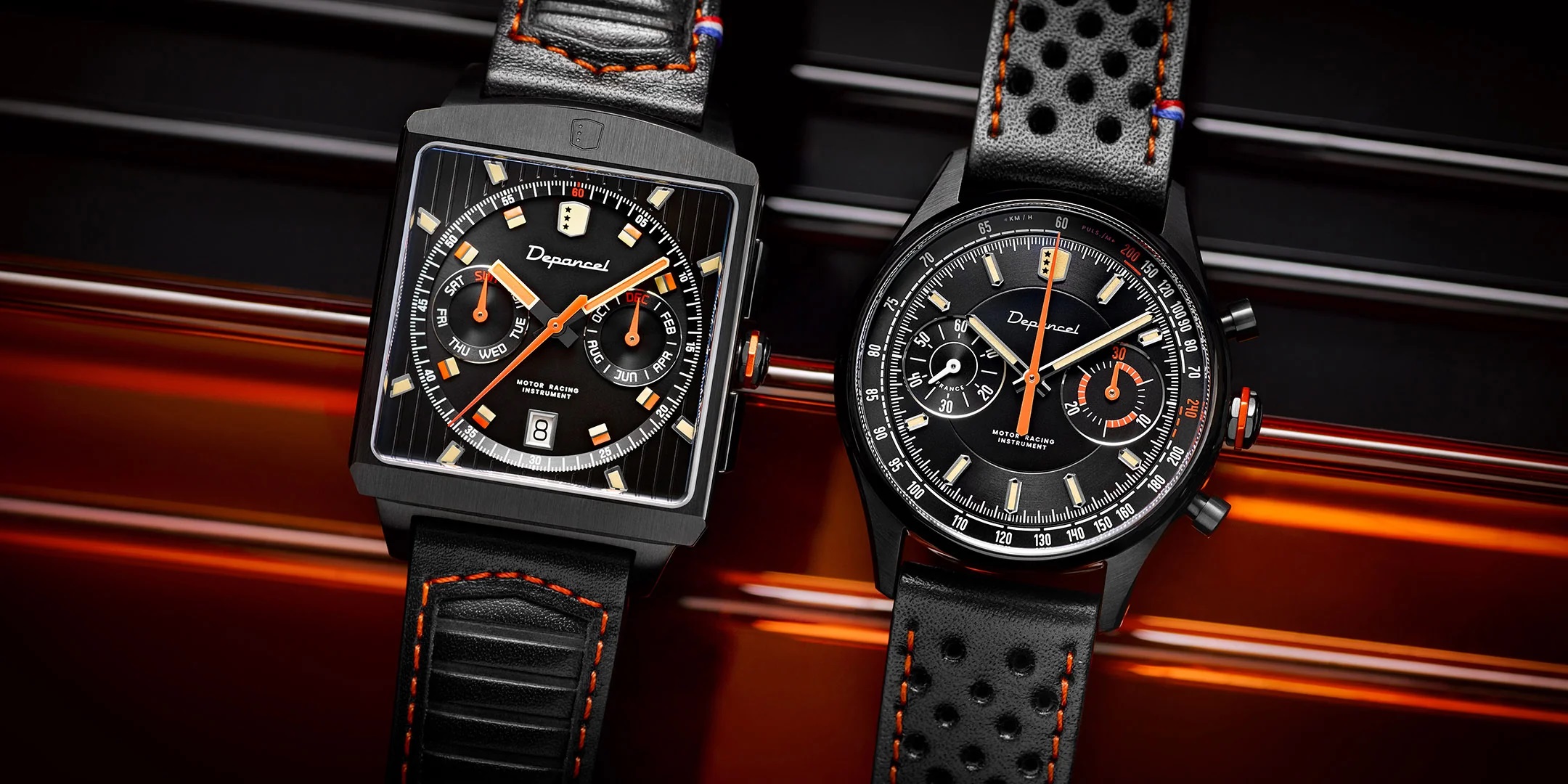
Hey there, fellow watch enthusiasts! Have you ever looked at a Black Chronograph Watch and felt that undeniable pull, that blend of sophistication and raw power? It’s more than just a timepiece; it’s a statement, an extension of your personality that whispers tales of precision, adventure, and undeniable style. Here at oecst.com, we understand that deep appreciation for horology, especially when it comes to the captivating world of chronographs. A black chronograph, in particular, perfectly embodies a unique intersection of history, cutting-edge technology, and a design aesthetic that’s simply… cool.
A Journey Through Time: The History and Evolution of the Chronograph
The story of the chronograph is a fascinating saga of human ingenuity and our relentless quest to conquer time, not just tell it.
From Horse Races to Space Exploration: The Birth of a Complication
Imagine a time when measuring brief intervals was a challenge. The very first iteration of what we now call a chronograph emerged in the early 19th century. Louis Moinet is often credited with creating the initial form in 1816, a device designed for astronomical observation that could measure intervals down to an impressive 1/60th of a second. Just a few years later, in 1821, Nicolas Rieussec developed an ink-dropping mechanism specifically for timing horse races, marking elapsed time directly onto a dial. This truly laid the groundwork for the “time writer” that the Greek roots of “chrono” (time) and “graph” (measure) suggest.
Fast forward through the early 20th century, and chronographs became indispensable tools for aviators and race car drivers. Their ability to measure speed, distance, and elapsed time with remarkable accuracy made them essential instruments, not just accessories. Think of legendary moments like the moon landing, where the Omega Speedmaster chronograph played a crucial role, solidifying its iconic status and proving the complication’s reliability under extreme conditions.
The Rise of Black in Horology
While the chronograph’s functionality evolved, so too did its aesthetic. For centuries, watches largely adhered to traditional metallic hues—silver, gold, and white dials. The emergence of black watches, especially black chronographs, marked a deliberate departure from these norms. This shift wasn’t merely a stylistic whim; it was a technological revolution.
The real surge in popularity for all-black watches began in the 2000s, driven by advancements in material science. Techniques like Physical Vapor Deposition (PVD) and Diamond-Like Carbon (DLC) coatings became widespread. These innovative processes allow for the application of thin, incredibly hard black layers onto watch cases and components, making them not only visually striking but also significantly more durable and scratch-resistant than previous attempts at black finishes. Suddenly, a watch could be entirely black, from case to dial to strap, offering a sleek, modern, and versatile aesthetic that captivated a new generation of enthusiasts. Early pioneers like Porsche Design’s Chronograph 1 in 1972 and the iconic Heuer Monaco “Dark Lord” in 1975 showcased the potential of black-coated timepieces, despite the initial challenges with coating durability.
The Heart of Precision: How a Chronograph Watch Works
At its core, a black chronograph watch is a marvel of micro-engineering, a symphony of tiny gears and springs working in harmony to provide both standard time and precision timing capabilities.
Dials, Pushers, and Movements: An Inside Look
Every chronograph, whether it’s a sleek black beauty or a classic steel model, shares fundamental components. You’ll typically find a main dial for telling the time, much like any other watch. What sets it apart are the sub-dials (often two, known as bi-compax, or three, tri-compax) that display elapsed seconds, minutes, and sometimes hours. These smaller dials are the heart of the stopwatch function.
On the side of the watch case, usually at the 2 and 4 o’clock positions, are the pushers. These are your control panel: one button starts the timing, another stops it, and a third (or a second press of the stop button) resets the chronograph hands back to zero.
Underneath the surface lies the movement, the engine of the watch. Chronographs can be:
- Automatic (Self-Winding): Powered by the motion of your wrist, these movements are a testament to traditional mechanical craftsmanship and are often highly prized by collectors.
- Manual (Hand-Wound): Requiring daily winding, these offer a more intimate connection to the watch and its heritage.
- Quartz (Battery-Powered): Known for their precision and affordability, quartz chronographs are highly reliable and low-maintenance.
Beyond Basic Timing: Understanding Tachymeters and Other Functions
While basic stop-start timing is common, many black chronograph watches offer advanced functions that extend their utility:
- Tachymeter: A scale typically found on the bezel, a tachymeter allows you to measure speed over a known distance. You start the chronograph at a starting point and stop it after covering a specific distance (e.g., one kilometer); the corresponding number on the tachymeter scale indicates the speed in units per hour.
- Pulsometer: This specialized scale helps medical professionals or health enthusiasts quickly measure a pulse or heart rate.
- Telemeter: Designed to measure distance based on the speed of sound, useful for calculating how far away a visible and audible event (like lightning and thunder) is.
- Flyback Chronograph: A more advanced feature that allows the chronograph to be reset and immediately restarted with a single push of a button, crucial for timing consecutive events quickly, such as laps in a race.
- Rattrapante (Split-Seconds) Chronograph: This complex mechanism features two central chronograph seconds hands, allowing you to time two separate events that start at the same time but end at different intervals.
Iconic Shades of Stealth: Popular Black Chronograph Watch Types
The appeal of a black chronograph watch often lies in its understated yet powerful presence. The “all-black” aesthetic, or “blacked-out” look, has become a significant trend, transforming watches from mere instruments into bold fashion statements.
Materials that Make a Statement: PVD, DLC, Ceramic, and More
The magic behind many black chronographs comes from advanced materials and coatings:
- PVD (Physical Vapor Deposition): This process creates a thin, hard black layer atomically bonded to the metal underneath, offering good scratch resistance and a sleek finish.
- DLC (Diamond-Like Carbon): An even harder and more durable coating than PVD, DLC utilizes carbon to achieve diamond-like properties, making the watch highly resistant to scratches and wear.
- Ceramic: Watches made from black ceramic are colored “through and through,” meaning the blackness isn’t just a surface coating. This material is incredibly scratch-resistant and lightweight, though it can be more prone to shattering upon impact compared to steel.
- Micro-blasted Titanium: A process that can give titanium a matte, dark grey, almost black finish, combining titanium’s inherent lightness and strength with a stealthy appearance.
These materials and treatments contribute to the black chronograph’s allure, offering both aesthetic appeal and enhanced durability. As watch expert Romain Marietta from Zenith once noted, “You want to make a watch look more modern, a bit cooler? Just add black. Even if you have a new piece generally inspired by the watches of, say, the 1970s, it doesn’t matter – add black and it looks contemporary. Black is back.”
Brands Defining the Black Chronograph Landscape
Many prestigious brands have embraced the black chronograph, creating highly sought-after models:
- Omega Speedmaster “Dark Side of the Moon”: A prime example of ceramic craftsmanship, this collection elevates the legendary Moonwatch with a full black ceramic case, dial, and often, strap.
- TAG Heuer Monaco “Dark Lord”: A modern reinterpretation of the 1970s original, this model features a black DLC-coated titanium case with striking rose gold and red accents, honoring its rebellious spirit.
- Breitling Avenger B01 Chronograph 44 Night Mission: Known for its robust and imposing presence, Breitling offers blacked-out versions of its pilot’s chronographs, often with high-performance movements.
- IWC Pilot’s Watch Chronograph Top Gun Ceratanium: Utilizing a unique material that combines titanium’s lightness with ceramic’s hardness, IWC creates pilot watches with an ultra-tough, matte black finish.
- Rolex Daytona: While not exclusively black, many Daytona models feature black dials or ceramic bezels that contribute to a striking black aesthetic, especially when paired with a black Oysterflex bracelet.
Choosing Your Perfect Black Chronograph: A Buyer’s Guide
Selecting the right black chronograph watch is a personal journey, blending your lifestyle needs with your aesthetic preferences.
Key Factors to Consider: Movement, Material, and Water Resistance
When you’re ready to pick out your perfect black chronograph, think about these crucial elements:
- Movement: Do you appreciate the intricate mechanics and history of an automatic movement, or do you prioritize the grab-and-go accuracy and lower maintenance of a quartz model?
- Case Material and Coating: Consider the durability and aesthetic. PVD and DLC offer excellent scratch resistance and a deep black hue. Ceramic provides a true, uniform black and is incredibly hard, but may be more brittle. Stainless steel with black accents offers a classic yet modern look.
- Water Resistance: Even if you’re not a diver, a watch with at least 50 to 100 meters of water resistance provides peace of mind against splashes, rain, and everyday mishaps. For sports or water activities, higher ratings are essential.
- Dial Legibility: Black-on-black designs can sometimes make readability a challenge. Look for models with contrasting indices, hands, and luminous material to ensure you can tell time easily, even in low light.
- Chronograph Functions: Do you need a simple start/stop timer, or would a flyback or rattrapante function genuinely enhance your daily life or hobbies? Don’t overpay for features you won’t use.
- Comfort and Fit: A watch should feel good on your wrist. Consider the case size and weight in relation to your wrist circumference. Trying it on, if possible, is always recommended.
Style and Versatility: Pairing Your Black Chronograph with Any Outfit
One of the greatest strengths of the black chronograph watch is its incredible versatility. It can effortlessly transition between various settings:
- For the Office and Formal Events: Opt for a black chronograph with a sleek, slimmer profile, a clean black dial, and a matching leather strap. This combination exudes elegance and sophistication without being overly flashy.
- For Sports and Outdoor Activities: Choose robust, water-resistant models with durable rubber or metal bracelets. Look for features like strong lume and sturdy construction that can withstand an active lifestyle.
- For Casual Weekend Wear: This is where you can truly express yourself! A black chronograph with a textured dial, a bold strap (perhaps NATO or a different material), or unique design elements can perfectly complement jeans, a t-shirt, or a casual jacket.
Beyond the Wrist: Collecting and the Future of Black Chronographs
The black chronograph is more than just a fleeting trend; it’s a significant chapter in horological design.
Investment and Enduring Appeal
Many black chronograph watches, especially limited editions or those from prestigious brands, hold strong value in the secondary market. Their unique aesthetic and the technical prowess required to achieve durable black finishes contribute to their collectibility. The “dark side” appeal offers a modern twist on classic complications, ensuring these watches remain relevant and desirable for years to come. As independent watch designer Martin Frei from Urwerk suggests, the black canvas opens up new possibilities for designers, transforming watches into “small sculptures” that highlight volume and form rather than just reflective surfaces.
Current Trends and Innovations
The quest for the “perfect black” continues in the watch industry. Manufacturers are constantly innovating, exploring new materials and advanced coating techniques that offer enhanced durability, scratch resistance, and aesthetic depth. We’re seeing more ceramic cases, integrated bracelets, and unique finishing techniques that bring out subtle details even on a fully black surface. The future promises even more sophisticated and resilient black chronographs, pushing the boundaries of design and engineering.
Frequently Asked Questions About Black Chronograph Watches
Got more questions? Let’s dive into some common inquiries about these stealthy timekeepers.
What is a black chronograph watch?
A black chronograph watch is a timepiece that combines the regular function of telling time with a built-in stopwatch feature, all encased in a predominantly black design, often achieved through specialized coatings or materials.
Why are black watches popular?
Black watches, particularly chronographs, are popular because they offer a sleek, modern, and versatile aesthetic that breaks away from traditional metallic watch designs. They are often perceived as sophisticated, sporty, and capable of blending seamlessly with various styles.
How do you maintain a black-coated watch?
Maintaining a black-coated watch involves regular cleaning with a soft cloth and mild soap (if water resistant). It’s crucial to avoid harsh chemicals and abrasive materials. While modern PVD and DLC coatings are durable, extreme impacts should still be avoided to prevent chipping or deep scratches.
What are the best brands for black chronographs?
Many luxury and independent brands offer excellent black chronographs, including Omega (e.g., Speedmaster “Dark Side of the Moon”), TAG Heuer (e.g., Monaco “Dark Lord”), Breitling (e.g., Avenger Night Mission), IWC (e.g., Pilot’s Watch Chronograph Top Gun), and brands utilizing ceramic or PVD/DLC coatings to achieve a distinctive black look.
Can a black chronograph be worn formally?
Absolutely! A black chronograph can be worn with formal attire, provided you choose a model with a slimmer profile, a clean dial, and a black or dark leather strap. Avoid overly sporty or bulky designs for very formal occasions to maintain an elegant appearance.
Conclusion
The black chronograph watch stands as a testament to the enduring appeal of blending purposeful engineering with compelling design. From its humble origins timing horse races to its commanding presence in modern fashion, it has continuously evolved, embodying precision, versatility, and an unmistakable sense of style. Whether you’re drawn to its historical significance, its mechanical brilliance, or its sleek aesthetic, a black chronograph is more than just an instrument; it’s a statement, a reliable companion, and a cherished piece of horological art. We invite you to explore the captivating world of black chronograph watches and discover the one that perfectly tells your story.