Have you ever looked up at the sky, watching an airplane soar, and wondered about the meticulous planning and precision that goes into every flight? Beyond the marvel of modern technology, there’s a fascinating story etched into the very instruments that once guided these magnificent machines. At the heart of this tale lies the Aviator Chronograph Watch – far more than a simple timepiece, it’s a testament to human ingenuity, courage, and an unyielding pursuit of precision.
These remarkable watches aren’t just for pilots anymore; they are a bridge to aviation history, a symbol of adventure, and a statement of discerning taste. If you’re captivated by the blend of robust functionality and timeless elegance, then buckle up, because we’re about to embark on an exhilarating journey into the world of the aviator chronograph watch.
A Journey Through Time: The Rich History of the Aviator Chronograph
The story of the aviator chronograph watch is intricately woven with the dawn of flight itself. In the nascent days of aviation, pilots faced unique challenges, not least of which was accurately tracking time while keeping their hands on the controls.
From Pocket to Wrist: The Birth of Pilot Watches
Imagine the early 1900s. Pilots, daring pioneers of the sky, were fumbling with cumbersome pocket watches, an impractical and dangerous endeavor mid-flight. The need for a hands-free, easily readable timepiece was clear. This necessity spurred a revolution in watchmaking. One of the most famous catalysts was Brazilian aviation pioneer Alberto Santos-Dumont. In 1904, he approached his friend Louis Cartier with a problem, leading to the creation of the Cartier Santos – widely regarded as the first pilot’s wristwatch. This groundbreaking timepiece, with its distinctive square case and bold numerals, set a design language that would influence countless aviator watches to come.
Wartime Wings and Essential Instruments
The two World Wars drastically accelerated the development and adoption of pilot watches. During World War I, wristwatches became standard military issue, proving invaluable for coordinating movements and timing maneuvers. By World War II, the pilot’s watch had evolved into a critical piece of equipment. Military pilots required instruments that were not only highly legible but also incredibly durable, capable of withstanding extreme conditions like high altitudes, temperature fluctuations, and intense vibrations. Chronograph functions became absolutely essential for tasks like timing bombing runs, navigation legs, and calculating fuel consumption. Brands like IWC, Breitling, and A. Lange & Söhne rose to prominence during this era, producing rugged, anti-magnetic watches with oversized crowns, designed for easy operation even while wearing thick flight gloves.
The Golden Age of Aviation and Iconic Complications
The mid-20th century, often hailed as the “Golden Age of Aviation,” saw further advancements in the aviator chronograph watch. As aircraft became more sophisticated and flights longer, new complications emerged to meet the evolving demands of pilots.
- Longines Lindbergh Hour Angle Watch (1931): Developed in collaboration with legendary aviator Charles Lindbergh, this watch allowed pilots to calculate their longitude and true north, a vital navigation tool before the advent of modern GPS.
- Breitling Navitimer (1952): An icon of pilot watches, the Navitimer introduced an integrated slide rule bezel. This innovative feature transformed the watch into a “mechanical calculator” for pilots, enabling them to perform a range of in-flight calculations directly on their wrist, from fuel consumption to airspeed, climb rates, and even unit conversions.
- Rolex GMT-Master (1950s): With the advent of commercial transatlantic flights, pilots and travelers needed to track multiple time zones simultaneously. Rolex responded with the GMT-Master, featuring a distinctive 24-hour hand and a rotating bezel, allowing for the display of a second (or even third) time zone.
These innovations cemented the aviator chronograph watch’s place as an indispensable tool, blending precision engineering with the spirit of adventure.
Deconstructing Precision: How an Aviator Chronograph Works
At its core, an aviator chronograph watch is a marvel of micro-mechanics, designed to offer both standard timekeeping and a precise stopwatch function.
The Heart of the Chronograph: Stopwatch Functionality
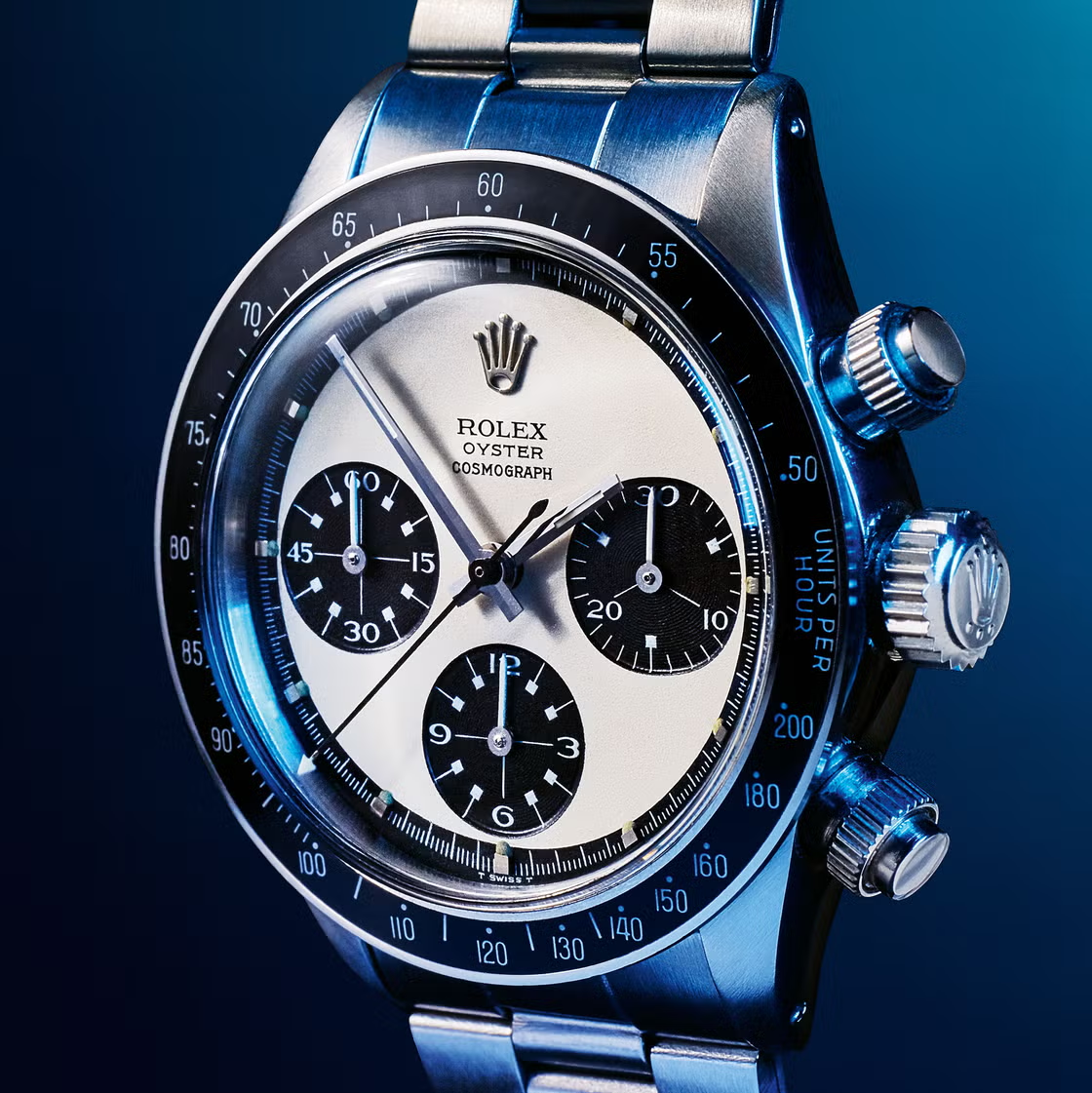
A conventional chronograph operates much like a mechanical stopwatch. You’ll typically find two or three subdials on the watch face, along with two pushers on the side of the case, flanking the crown.
- Start/Stop Pusher: Usually located at 2 o’clock, this button initiates and halts the chronograph’s timing function.
- Reset Pusher: Typically at 4 o’clock, this button instantly returns the chronograph hands (and any activated subdials) back to their zero positions.
- Subdials: These smaller dials measure elapsed seconds (often a central sweep hand), minutes (typically up to 30 or 60 minutes), and sometimes hours (up to 12 hours) once the chronograph is activated.
This functionality allows for meticulous timing of events, a crucial capability for pilots who needed to track specific flight segments or other time-sensitive operations.
The Piloted Flyback: Speed and Accuracy
One of the most remarkable and pilot-specific complications in an aviator chronograph watch is the “flyback” function. In a standard chronograph, you must press the start/stop pusher, then the reset pusher, and then the start/stop pusher again to time a new event. This three-step process can be too slow when precision and speed are paramount, such as when a pilot needs to time successive navigation legs.
The flyback chronograph simplifies this. With a single press of the reset pusher (while the chronograph is running), the stopwatch hands instantly fly back to zero and immediately restart, beginning a new timing sequence. This seamless, instantaneous reset and restart capability was a game-changer for pilots, allowing for rapid and accurate timing of multiple events in quick succession without interruption. The intricate mechanism behind this function requires precise coordination of gears within the chronograph movement, a testament to haute horlogerie.
Beyond Basic Timing: Essential Complications
While the chronograph is central, aviator watches often integrate other complications that enhance their utility:
- Tachymeter Scale: Found on the outer bezel, this scale allows the wearer to measure speed over a known distance. By timing how long it takes to cover one unit of distance (e.g., one mile or one kilometer), the hand will point to the corresponding speed on the tachymeter scale.
- GMT (Greenwich Mean Time) Function: As discussed, this complication enables tracking of a second time zone, invaluable for international travel and coordination across different regions.
- Rotating Bezels: Many pilot watches feature a rotating bezel (bidirectional or unidirectional) that can be used for various timing purposes, such as marking a specific point in time or calculating elapsed time without engaging the main chronograph.
- Slide Rule Bezel: Most notably on the Breitling Navitimer, this bezel acts as a circular slide rule, allowing pilots to perform complex calculations such as fuel consumption, climb/descent rates, and distance conversions.
The Hallmarks of a True Aviator Chronograph: Design and Durability
The distinctive aesthetics of an aviator chronograph watch are not merely a matter of style; they are born from a deeply rooted commitment to functionality and reliability. Every design element serves a purpose, ensuring peak performance in the demanding environment of a cockpit.
Legibility in the Cockpit
For a pilot, reading the time quickly and accurately, regardless of lighting conditions, is paramount. This necessity dictates several key design choices:
- Large, Clear Dials: Aviator watches often feature generously sized dials, maximizing space for crucial information.
- High-Contrast Numerals and Hands: Bold, often Arabic numerals stand out against a dark dial (typically black or dark blue), ensuring immediate readability. The hands are usually broad and distinct.
- Luminescent Coatings: Super-LumiNova or similar luminous materials are generously applied to hands, numerals, and markers, guaranteeing excellent visibility in low-light conditions, or during night flights.
Built for the Skies: Robust Construction
An aviator chronograph watch must be able to endure the rigors of flight. Its construction emphasizes durability and resistance to environmental factors:
- Robust Cases: Crafted from tough materials like stainless steel, titanium, or ceramic, these cases protect the delicate movement within.
- Anti-Magnetic Properties: Cockpits are filled with electronic equipment that can interfere with a mechanical watch’s precision. Many aviator watches incorporate soft iron inner cages or specialized alloys to shield the movement from magnetic fields.
- Shock Resistance: Designed to withstand sudden impacts and vibrations, crucial for the dynamic environment of aviation.
- Water Resistance: While not dive watches, aviator chronographs offer sufficient water resistance to protect against moisture and accidental splashes.
Practicality Personified: Crowns and Straps
Even subtle design choices highlight the practicality of these timepieces:
- Oversized Crown: The large, often fluted crown is a signature feature, allowing pilots to easily wind and set the watch even while wearing thick leather gloves.
- Sturdy Straps: Commonly made of riveted leather, these straps were historically designed to be worn over flight jackets. Today, they continue to offer a comfortable and secure fit, embodying the rugged aesthetic. Alternatively, robust textile or metal bracelets are also popular options, built to last.
Legendary Brands and Iconic Aviator Chronographs
The world of aviator chronograph watches is populated by an array of legendary brands, each contributing to its rich heritage and offering iconic models that continue to captivate enthusiasts.
Breitling: Perhaps synonymous with aviation, Breitling’s Navitimer is an undisputed icon, instantly recognizable by its circular slide rule bezel. It’s a true pilot’s instrument, celebrated for its complex functionality and distinctive aesthetics. Breitling also offers other formidable pilot chronographs like the Chronomat and Avenger series, known for their robust build and precise movements.
IWC Schaffhausen: With a heritage deeply intertwined with military pilot watches, IWC produces highly revered aviation timepieces. Their Pilot’s Watch Chronograph series, alongside the iconic Big Pilot and Mark series, showcases exceptional legibility, robust construction, and understated elegance. IWC’s commitment to in-house movements further elevates their appeal.
Zenith: A pioneer in high-frequency chronographs, Zenith’s El Primero movement is legendary. Their Pilot collection, especially models like the Pilot Big Date Flyback, combines historical aviation design cues with cutting-edge mechanical precision, often featuring the practical flyback function crucial for pilots.
Sinn: Hailing from Germany, Sinn is celebrated for its highly functional and technologically advanced tool watches. The Sinn 356 Pilot chronograph, for instance, is praised for its clear, legible dial and robust construction, embodying the brand’s engineering-first philosophy.
Longines: With a long and distinguished history in aviation timing, Longines has produced significant pilot watches, including the famed Lindbergh Hour Angle Watch. Their modern Spirit collection offers contemporary aviator chronographs that blend historical inspiration with modern performance.
Other notable brands contributing to the aviator chronograph legacy include Omega (whose Speedmaster, while iconic for space, is a highly capable tool chronograph), Patek Philippe with its luxurious Calatrava Pilot Travel Time Chronograph, and Hamilton with its military-inspired Khaki Aviation Pilot Pioneer Mechanical.
|
Our Picks for the Best Chronograph Watch in 2026
As an Amazon Associate I earn from qualifying purchases.
|
||
| Num | Product | Action |
|---|---|---|
| 1 | GOLDEN HOUR Fashion Business Mens Watches with Stainless Steel Waterproof Chronograph Quartz Watch for Men, Auto Date |

|
| 2 | Invicta Men\'s 1326 Invicta II Chronograph Black Dial Two-Tone Stainless Steel Watch |
|
| 3 | OLEVS Watches for Men Analog Quartz Luxury Diamond Waterproof Chronograph Stainless Steel Big Face Square Date Moon Phase Roman Numeral Dress Watch for Men |
|
| 4 | Timex Men\'s Marlin 40mm Watch |
|
| 5 | Citizen Men\'s Eco-Drive Weekender Brycen Chronograph Watch in Stainless Steel |
|
| 6 | Fossil Men\'s Nate Oversized Stainless Steel Chronograph Watch |
|
| 7 | BY BENYAR Mens Watches Analog Quartz Chronograph Waterproof Wrist Watches for Men Fashion Business Work Casual Sport Designer Dress Watch with Calendar Elegant Gifts for Men |
|
| 8 | Timex Men\'s Waterbury Classic Chrono 40mm Stainless Steel Quartz Dress Watch with Leather Strap |
|
| 9 | Timex Expedition Field Chronograph 43mm Men’s Analog Watch - INDIGLO Backlight - Durable Comfortable Adjustable Strap - Rugged Outdoor Watch - 100M Water Resistance |
|
| 10 | Citizen Quartz Mens Watch, Stainless Steel, Classic |
|
Choosing Your Co-Pilot: A Guide to Selecting an Aviator Chronograph
Selecting the perfect aviator chronograph watch is a personal journey, blending your aesthetic preferences with your practical needs and budget. Consider these factors to find your ideal aerial companion.
Understanding Your Needs
Before diving into models, think about what you value most in a watch.
- Mechanical vs. Quartz/Digital: Do you appreciate the intricate craftsmanship of a mechanical movement (manual-wound or automatic) or the precise, often feature-rich capabilities of a quartz or digital timepiece (which might include GPS, altimeters, and other smart functions)? Mechanical watches offer soul and heritage, while modern digital pilot watches provide advanced technological utility.
- Complications: How important are features like the flyback function, GMT, or a slide rule bezel to you? If you genuinely plan to use these features, prioritize watches that offer them seamlessly.
Style, Size, and Comfort
An aviator chronograph should feel right on your wrist and complement your personal style.
- Aesthetics: Do you prefer a vintage military-inspired look, a sleek modern design, or something in between?
- Case Diameter: Pilot watches traditionally have larger cases for legibility. Consider how a larger watch (40mm-46mm+) will feel and look on your wrist.
- Strap Options: Leather, metal bracelet, or textile? Each offers a different look and feel. Riveted leather straps evoke a classic pilot aesthetic.
Budget and Investment
The range of aviator chronographs spans a wide spectrum of prices.
- Entry-Level to Luxury: Excellent options exist at various price points. Be realistic about your budget.
- Value Retention: Some brands and iconic models tend to hold their value better as collectibles, making them a wise investment for enthusiasts. Research the secondary market if this is a concern.
The Enduring Allure: Collecting and Trends
The aviator chronograph watch holds a unique place in the hearts of collectors and enthusiasts alike, bridging the past and present with its powerful narrative.
Vintage Charm and Modern Innovation
There’s an undeniable romance in vintage aviator chronographs, each scratch and patina telling a story of flights taken and adventures had. These historical pieces are highly sought after for their authenticity and connection to aviation’s golden age. Yet, modern innovations continue to push boundaries, integrating advanced materials, cutting-edge movements, and smart technology into contemporary aviator watches, offering a blend of tradition and futuristic functionality. This duality ensures that the category remains vibrant and exciting for all types of collectors.
More Than a Timepiece: A Statement of Style
Beyond their technical prowess and historical significance, aviator chronographs possess an inherent style that transcends trends. Their bold designs, clear dials, and robust presence make them a versatile accessory, effortlessly transitioning from a casual weekend look to a more formal ensemble. Wearing an aviator chronograph is more than just telling time; it’s an expression of an appreciation for precision, adventure, and a nod to the pioneering spirit of aviation.
Maintaining Your Aerial Companion: Care and Preservation
Like any precision instrument, your aviator chronograph watch benefits from proper care to ensure its longevity and accuracy.
- Regular Cleaning: Gently wipe your watch with a soft, dry cloth to remove dust and fingerprints. For leather straps, avoid excessive moisture.
- Servicing: Mechanical watches, in particular, require periodic servicing (typically every 3-5 years) by a qualified watchmaker. This involves cleaning, lubricating, and checking the movement for optimal performance.
- Water Resistance: Always check your watch’s water resistance rating and ensure the crown is pushed in (and screwed down, if applicable) before any exposure to water.
- Storage: When not wearing your watch, store it in a cool, dry place, away from direct sunlight and strong magnetic fields. A watch box or winder is ideal.
Frequently Asked Questions about Aviator Chronograph Watches
Q1: What exactly is an aviator chronograph watch?
An aviator chronograph watch is a specialized timepiece that combines standard timekeeping with a stopwatch function, specifically designed to meet the rigorous demands of pilots and aviation. It features large, legible dials, robust construction, and often includes complications like flyback chronographs, GMT functions, and slide rule bezels to aid in in-flight calculations and navigation.
Q2: Why did pilots originally need chronograph watches?
Early pilots needed chronograph watches because pocket watches were impractical to operate while flying. Chronographs allowed them to accurately time critical flight maneuvers, calculate distances, track fuel consumption, and navigate effectively, all while keeping their hands on the controls, making them essential tools for aviation safety and performance.
Q3: What is a flyback chronograph and why is it important for pilots?
A flyback chronograph is a type of stopwatch function where, with a single press of a button, the running chronograph hands instantly reset to zero and immediately begin a new timing sequence. This rapid reset-and-restart capability is crucial for pilots who need to time successive events or navigation legs quickly and precisely without the interruption of a traditional three-step stop, reset, and start process.
Q4: Which brands are famous for making aviator chronograph watches?
Several brands are renowned for their aviator chronograph watches due to their historical contributions and ongoing innovations. Key names include Breitling (especially the Navitimer), IWC Schaffhausen (Pilot’s Watch Chronograph series), Zenith (Pilot collection with El Primero movements), Sinn, Longines (Spirit collection), and some models from Omega and Rolex.
Q5: How do I choose the right aviator chronograph for me?
Choosing the right aviator chronograph involves considering several factors: whether you prefer a mechanical or quartz movement, the specific complications you need (e.g., flyback, GMT, slide rule), the watch’s aesthetic style, its size and comfort on your wrist, and your budget. Researching different brands and models, and trying watches on, will help you find the perfect blend of functionality and personal style.
The Enduring Appeal
The aviator chronograph watch is more than a device that simply measures time; it’s a profound narrative of human ambition, precision engineering, and the timeless spirit of exploration. From its humble beginnings as a practical tool for intrepid pilots to its current status as a coveted collector’s item and a stylish accessory, this watch embodies a unique blend of history, utility, and refined aesthetics. It stands as a powerful reminder of how innovation can emerge from necessity, and how a well-crafted instrument can become a symbol of both courage and impeccable taste. We invite you to explore this fascinating world further, perhaps even finding your own perfect aviator chronograph to accompany you on life’s many adventures, both on the ground and in the skies.