There’s a raw, undeniable allure to the military chronograph watch. These aren’t just time-telling devices; they’re stoic witnesses to history, forged in the crucible of conflict, and refined by the relentless pursuit of precision. For generations, these robust timepieces have been vital companions on battlefields, in cockpits, and beneath the waves, shaping their design and functionality in ways that continue to captivate enthusiasts and collectors today. The military chronograph watch stands as a testament to human ingenuity under pressure, a blend of practicality and profound historical resonance that goes far beyond mere aesthetics.
The Chronicle of Combat: History and Significance of the Military Chronograph Watch
The concept of measuring elapsed time dates back to the early 19th century, initially finding its stride in scientific observation and sporting events like horse racing. However, it wasn’t until the brutal realities of World War I that the chronograph truly found its military calling. Soldiers needed a reliable way to time artillery shell impacts, coordinate attacks across vast distances, and calculate crucial flight parameters. Early military chronograph watches were often adapted pocket watches, but the need for quick, wrist-worn access spurred innovation. The Longines 13.33Z, introduced in 1913, stands out as one of the first chronograph movements specifically designed for wristwatches, embodying the nascent demand for wrist-mounted timing tools.
World War II marked the “golden age” of the military chronograph. Air forces, in particular, required unparalleled accuracy for navigation, bombing runs, and coordinating aerial maneuvers. Brands like Hanhart, Tutima, Longines, and Omega rose to the occasion, producing iconic chronographs for both Allied and Axis powers. These watches often featured oversized dials, highly luminous hands and markers for low-light visibility, and critically, the “flyback” function, which allowed pilots to reset and restart the stopwatch with a single push, saving precious seconds in dynamic situations. The American A-11, produced by manufacturers such as Elgin, Bulova, and Waltham, set rigorous standards for durability against water, dust, and extreme temperatures, earning it the nickname “the watch that won the war.”
Beyond WWII, the Cold War saw a global surge in military watch programs, from the utilitarian designs of Soviet-era Poljot to China’s secretive Project 304. While technology has evolved dramatically, rendering mechanical chronographs less essential for primary navigation, their legacy endures. Modern military-inspired chronographs often incorporate the robust features and legible designs of their forebears, celebrated not just for their technical prowess but for the stories they represent.
The Inner Workings: Mechanism and Key Components
At its heart, a military chronograph watch is a stopwatch integrated into a regular timepiece. Its operation is elegantly simple yet mechanically complex. Typically, two pushers flank the crown: one to start and stop the timing function, and another to reset it to zero. A central chronograph seconds hand sweeps across the main dial, while smaller subdials often track elapsed minutes and hours.
Let’s delve into some of the specialized mechanisms and scales that made these watches indispensable military tools:
- Flyback Function: As mentioned, this critical feature, born from military aviation, allows the chronograph to be reset and immediately restarted with a single press of a pusher. This was invaluable for pilots needing to time successive legs of a journey without losing a beat.
- Rattrapante (Split-Seconds) Chronograph: Though rarer and more complex, a rattrapante features two superimposed central chronograph seconds hands. One can be stopped independently to record an intermediate time (like a lap split), while the other continues running. A second push allows the stopped hand to “catch up” to the running one.
- Movement Types: Chronograph movements come in various architectures.
- Cam-Actuated Chronographs: These movements use a series of levers and a cam to control the start, stop, and reset functions. They are robust and reliable, making them a common choice for tool watches.
- Column Wheel Chronographs: Considered more refined, these movements utilize a cylindrical wheel with vertical “columns” to control the chronograph levers. They typically offer a smoother, more tactile pusher feel and are often found in higher-end military and civilian chronographs.
Military chronographs often feature specialized scales on their bezels or dials:
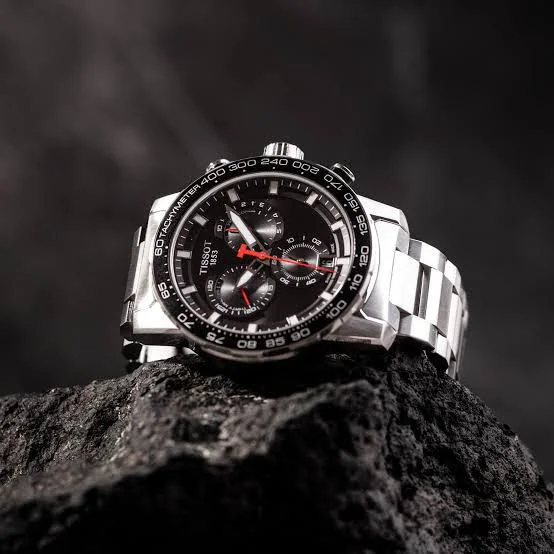
- Tachymeter: This scale allows the wearer to measure speed over a known distance. For example, if you time a vehicle traveling one kilometer and it takes 30 seconds, the tachymeter scale will indicate 120 units per hour (e.g., 120 km/h or mph). While often associated with motorsports, it was equally vital for pilots calculating airspeed.
- Telemeter: Directly linked to artillery use in WWI, a telemeter scale measures distance based on the speed of sound. You’d start the chronograph when you see a gun flash and stop it when you hear the sound. The hand would then point to the approximate distance. This feature was also useful for pilots to gauge distance to targets or landmarks.
Icons of the Air and Ground: Popular Military Chronograph Types and Features
While the general term “chronograph” applies broadly, military variants possess distinct characteristics born from their operational demands.
- Pilot’s Chronographs (Fliegerchronographen): These are arguably the most iconic military chronographs. They prioritized legibility, often featuring large, matte black dials with contrasting white Arabic numerals and bold, luminous hands. The German Luftwaffe chronographs by Hanhart and Tutima from WWII set a high bar for pilot’s watches, integrating flyback movements and robust cases. Post-war, watches like the Breguet Type XX for the French Air Force and the Heuer Bundeswehr for the West German forces continued this tradition, becoming highly sought-after for their blend of functionality and distinct design.
- Naval & Submarine Chronographs: While dive watches are more commonly associated with naval forces, chronographs were also issued, particularly to naval aviators. A fascinating example includes certain Lemania monopusher chronographs issued to the British Ministry of Defence, some of which were specifically produced without luminous material for use on nuclear submarines, to avoid false positives with radiation detectors.
- Ground Forces Chronographs: Defining a specific “army chronograph” is often challenging, as many were dual-purpose or initially designed for aviation but adopted by ground units. Early WWI chronographs with telemeter scales were crucial for artillery observers. Today, most ground forces rely on simpler, tactical digital or analog watches, but the rugged spirit of early military chronographs continues to influence designs.
Notable Military Chronograph Watches Through History:
- Longines 13.33Z (early 20th century): A pioneer in wrist-mounted chronograph movements.
- Hanhart Calibre 40/41 & Tutima (WWII): Essential pilot’s watches for the German Luftwaffe, renowned for their flyback movements and distinctive pushers.
- A-11 (WWII): The “watch that won the war,” standardized for Allied forces, emphasizing durability and legibility.
- Breguet Type XX (1950s onwards): An elegant and highly functional flyback chronograph initially developed for the French Air Force, now a civilian icon.
- Heuer Bundeswehr (1960s-1970s): A robust and distinctive flyback chronograph issued to the West German armed forces, famous for its large case and clear dial.
- Lemania Monopusher (1940s-1970s): Issued to the British RAF and Royal Navy, known for its unique asymmetric case design in later series.
Navigating the Market: Guide to Choosing and Maintaining Your Military Chronograph Watch
Choosing a military chronograph watch, whether a vintage piece or a modern tribute, involves understanding your priorities. Are you drawn to the historical accuracy of a reissue, the rugged dependability of a contemporary model, or the investment potential of a genuine vintage artifact?
Key Considerations When Choosing:
- Authenticity vs. Modernity: Decide if you want a true vintage piece with historical provenance and potential wear, or a modern watch that draws heavily on military design principles with updated materials and reliability.
- Movement Type: Manual-wind movements connect you to the heritage of early military watches, while automatic chronographs offer modern convenience.
- Complications: Do you need a flyback? Are tachymeter or telemeter scales important for the aesthetic or your occasional use?
- Durability: Look for robust cases, good water resistance (if you plan to wear it actively), and shock protection.
- Legibility: A cornerstone of military watch design, ensuring the dial is clear and easy to read in all conditions.
Maintaining Your Military Chronograph:
Like any precision instrument, a chronograph requires care. Regular servicing (every 3-5 years for mechanical movements) ensures accuracy and longevity. Keep it away from strong magnetic fields, extreme temperatures, and harsh chemicals. If your watch has water resistance, ensure gaskets are checked periodically, especially before exposure to water.
Beyond the Battlefield: Collecting Value and Trends
The collectibility of military chronograph watches has soared in recent decades. Enthusiasts are drawn to their tangible connection to significant historical events and the exceptional engineering required for their purpose-built design. Rare models, those with unique military markings, or examples in pristine condition, can command substantial prices.
“The allure of military chronographs lies in their honest purpose,” says Dr. Elias Thorne, a horological historian specializing in military timepieces. “They weren’t designed for luxury; they were designed for survival and precision, and that functionality translates into an enduring aesthetic.”
Trends show continued strong interest in watches from WWII, the Cold War, and specialized issues like the “Dirty Dozen” (a collection of 12 distinct British military watches, some of which were chronographs). Modern brands also continue to release contemporary interpretations, offering the classic military aesthetic with modern reliability.
Style with Substance: Pairing Your Military Chronograph
A military chronograph watch is more than just a functional tool; it’s a statement. Its inherent ruggedness and purpose-driven design make it incredibly versatile in terms of style.
- Casual & Utilitarian: Naturally, a military chronograph pairs perfectly with casual attire—denim, leather jackets, field jackets, and sturdy boots. Its robust presence complements a utilitarian aesthetic, reflecting its origins.
- Smart Casual: Don’t shy away from pairing it with smart casual outfits. A well-designed military chronograph can add a touch of confident, understated cool to a blazer, chinos, or a crisp button-down shirt. The contrast between its tool-watch nature and a more refined ensemble can be particularly striking.
- Dressier (with caveats): While not a traditional dress watch, some of the more refined military chronographs, like certain Breguet Type XX models, can be worn with a suit, particularly in less formal business settings, showcasing a discerning taste for horological history.
The key is to embrace its character. The large pushers, legible dials, and sometimes thicker cases are part of its charm. They tell a story of function over pure form, a narrative that resonates with many.
Conclusion
From the trenches of World War I to the vast expanse of the skies and the depths of the oceans, the military chronograph watch has served with distinction, proving its mettle when every second counted. It’s a compelling blend of historical significance, mechanical marvel, and unwavering reliability. For collectors, it offers a tangible link to pivotal moments in human history. For everyday wearers, it provides a rugged, stylish, and supremely functional timepiece that whispers tales of daring and precision. Embrace the legacy, understand the mechanism, and choose a military chronograph watch that not only tells time but also tells your story.
|
Our Picks for the Best Chronograph Watch in 2026
As an Amazon Associate I earn from qualifying purchases.
|
||
| Num | Product | Action |
|---|---|---|
| 1 | Citizen Quartz Mens Watch, Stainless Steel, Classic |

|
| 2 | GOLDEN HOUR Fashion Business Mens Watches with Stainless Steel Waterproof Chronograph Quartz Watch for Men, Auto Date |
|
| 3 | Citizen Men\'s Eco-Drive Weekender Brycen Chronograph Watch in Stainless Steel |
|
| 4 | Fossil Men\'s Nate Oversized Stainless Steel Chronograph Watch |
|
| 5 | Timex Men\'s Waterbury Classic Chrono 40mm Stainless Steel Quartz Dress Watch with Leather Strap |
|
| 6 | Timex Expedition Field Chronograph 43mm Men’s Analog Watch - INDIGLO Backlight - Durable Comfortable Adjustable Strap - Rugged Outdoor Watch - 100M Water Resistance |
|
| 7 | Invicta Men\'s 1326 Invicta II Chronograph Black Dial Two-Tone Stainless Steel Watch |
|
| 8 | OLEVS Watches for Men Analog Quartz Luxury Diamond Waterproof Chronograph Stainless Steel Big Face Square Date Moon Phase Roman Numeral Dress Watch for Men |
|
| 9 | BY BENYAR Mens Watches Analog Quartz Chronograph Waterproof Wrist Watches for Men Fashion Business Work Casual Sport Designer Dress Watch with Calendar Elegant Gifts for Men |
|
| 10 | Timex Men\'s Marlin 40mm Watch |
|